Pulled pork and men’s sliders are in. But enough about your weekend barbecue plans… The Office of National Statistics, the agency that monitors the price of everyday things to officially report on British inflation rates, has spoken.
It tracks a ‘basket of goods’ – a selection of common purchases that represent ordinary Brits’ outgoings – to see how quickly costs are rising. From sofa beds to blow dries, the basket is regularly tweaked to keep it up to date.
This year, in came VR headsets, pot noodles and yoga mats, reflecting somewhat conflicting trends in tech, convenience and wellness. Out went DVD rental, newspaper adverts and oven-ready gammon joints – never let it be said that the ONS is not on the very cusp of modern culture.
Also cast out were “meals at in-store cafeterias, including department stores”, booted from the basket because “the prevalence of these outlets has dropped, with many store closures” according to the agency.
This was prescient (though presumably unrelated), as Morrisons announced the closure of 52 of its cafés just a week later. Sainsbury’s had announced the end of its own café offer a couple of months earlier, at the start of 2025, claiming most shoppers “do not use the cafés regularly”.
Of course, hungry and thirsty shoppers are not left high and dry – Sainsbury’s hosts more than 60 Starbucks outlets in its stores, and Morrisons CEO Rami Baitiéh hinted at a similar strategy, claiming he plans to work with third parties “to provide a relevant specialist offer”.
It’s easy to see why grocers are lured by the siren call (or insert equally apt metaphor for your QSR chain of choice). They enjoy lucrative rent and revenue splits from third-party operators, compared to the costly, time-consuming effort of running their own hospitality offer. For the operators, there’s guaranteed footfall, out-of-town locations, and healthier profit margins than the supermarket achieved thanks to scale and slick operating models.
But is it the same? Does a global coffee giant, high-street sushi shop or well-known burrito bar tucked into the entrance of a supermarket provide the same benefit to customers that the slightly drab, unbranded, own-name cafeteria, with its plastic trays, once did?
Affordability was always a core tenet of the shop café – Tesco offers a ‘Kids Eat Free’ scheme with the purchase of any adult item. IKEA café kids’ meals start at 95p. Asda’s are a little dearer at £1, but with no adult spend required.
And over the last three years, Morrisons has given away 22,000 bowls of cereal to children. In partnership with Kellogg’s, and responding to research that found two in five parents were anxious about feeding their kids during school holidays, the grocer rolled out the scheme in 396 of its cafés. A tactical brand-building campaign? Sure. But in a cost-of-living crisis, let’s not diminish the net good of 22,000 occasions where a child might have gone hungry – and didn’t.
The partnership was not referenced in Morrisons’ announcement regarding its café closures; the future of the scheme is unknown.
The widespread shuttering of in-store cafés has prompted outcry, highlighting the critical role these spaces play – especially for marginalised groups.
Writing for the i paper, Emma Hutchings says “supermarket cafés are a lifeline for parents like me – I’m sad to see their decline. I can trace the geography of my son’s childhood through our succession of local libraries, nearest playgrounds – and Morrisons cafés. When he was a newborn, there was one 15 minutes’ walk away. It was the only place we could manage.”
On Facebook, comments on the Jeremy Vine Show page agree. Nicky Edwards says “it’s so sad for customers and staff. The café is a hub for meeting up, especially for the elderly and families.” Abi Starr agrees, “I have a variety of illnesses and disabilities. I need to rest after travelling to the supermarket… [I] rely on these a lot.”
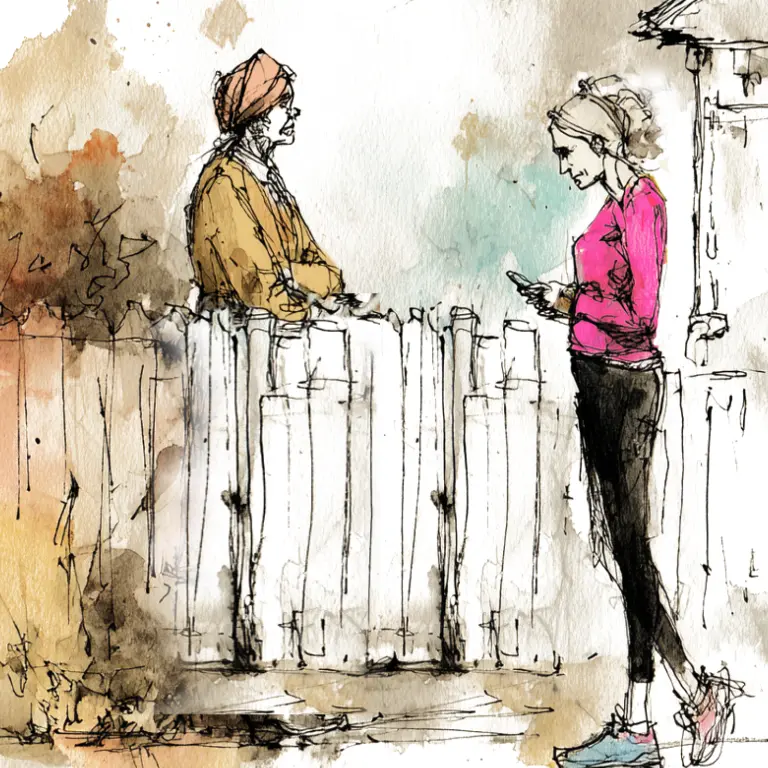
Is it unfair to assume that a big brand operator won’t fill this role? That it won’t provide the same affordability, accessibility and community? Because it was never about the coffee or food. The reason that in-store cafés are so important to the elderly, the disabled, the isolated, the new parents, the low-income, is that they offer a space where those who need it are welcome.
Enough space for pushchairs, wheelchairs or other mobility aids. Uncomplicated menus and ordering styles. Friendly service that may be a vital, singular moment of human connection in an otherwise lonely day. A familiar and affordable menu – even free, filling the belly of a hungry child. And the choice to linger comfortably, without being moved along. But it’s also true that our grocers are not charities. This is not their job.
Retail is a brutal industry where every square metre fights for its life on revenue generated. And it is undeniable that those generous, accessible spaces needed expensive floor plans, or that a third-party operator will make more margin on a £4.40 strawberry matcha than the café ever did on £1 filter coffee (with free refills).
It’s also true that my perspective here is more rose-tinted than that strawberry matcha. The promise of a cheese scone in the BHS café was my mother’s go-to bribe for my sister and me to dutifully trail her around the department store on a Saturday morning. To this day, that scone brings a more powerful Proustian rush for memories of my late mum than the remains of her last bottle of Chanel Cristal.
But could I say I’ve visited an in-store café in the intervening two decades? Nope – whereas my high-street coffee chain habit borders on daily. It’s a classic case of secondhand nostalgia. I want these spaces to survive – thrive, ideally – I just don’t particularly want to visit one myself.
It seems I’m not the only one with a soft spot for the in-store café though – and its other customers do go (or at least say they do). The 2024 Allegra report on non-specialist coffee providers shows more than half (52.5%) of respondents had visited an M&S café in the previous 12 months. A quarter had visited a John Lewis or Morrisons café. These visitors were more likely (by 28% for M&S café) to be women, and twice as likely (for Morrisons café) to be over 55.
Happily, there is cause for cautious optimism.
John Lewis recently announced it was expanding its hospitality offer to “win back more shoppers” after transactions in its store cafés rose by 6% in the past year. Its planned new spaces will take the total in-store cafés to 62 by the end of 2025. In fact, the high-end version of the in-store café – where they prefer “coffee shop”, “restaurant” or the oddly utilitarian “eatery” – is positively booming.
Harrods Food Halls are constantly heaving, hosting stalls from caviar merchants to a food-to-go spin-off from the Michelin-starred Gymkhana Fine Foods. Up north, three of Newcastle’s highest Trip Advisor-rated restaurants can be found in designer department store Fenwick. These are not, however, accessible and accommodating spaces for the community. What’s happening at the value end of the market?
Well, Asda is also actively investing, relaunching in-store cafés across the UK under a new Asda Kitchen brand. And while the press release hints at “a more modern dining experience” and “coffee shop atmosphere”, it did point out that “traditional favourites” would stay on the menu, that “manned tills” would remain alongside new kiosks, and that food would be delivered to tables. Survival of the £1 children’s meals was not confirmed. So, perhaps the shop café isn’t gone – just gone quiet.
And maybe the key to their future being more ‘pulled pork’ than ‘gammon joint’ is in remembering their superpower – human connection.
Places that don’t just count customers, but make customers count. Places that never write ‘build community’ in a brief – they simply do it.