Certain clichés about teenagers hold true across the years. They’re surly and uncommunicative. They speak in grunts and shrugs. They’re always on their phones but are too scared to answer them.
Like a lot of clichés, there’s some truth behind them. (A recent survey suggested 70% of young British adults prefer receiving a text than a phone call and a quarter of them never answer their phones at all.) But, still, a lack of communication isn’t usually something I recognise in my own teenager.
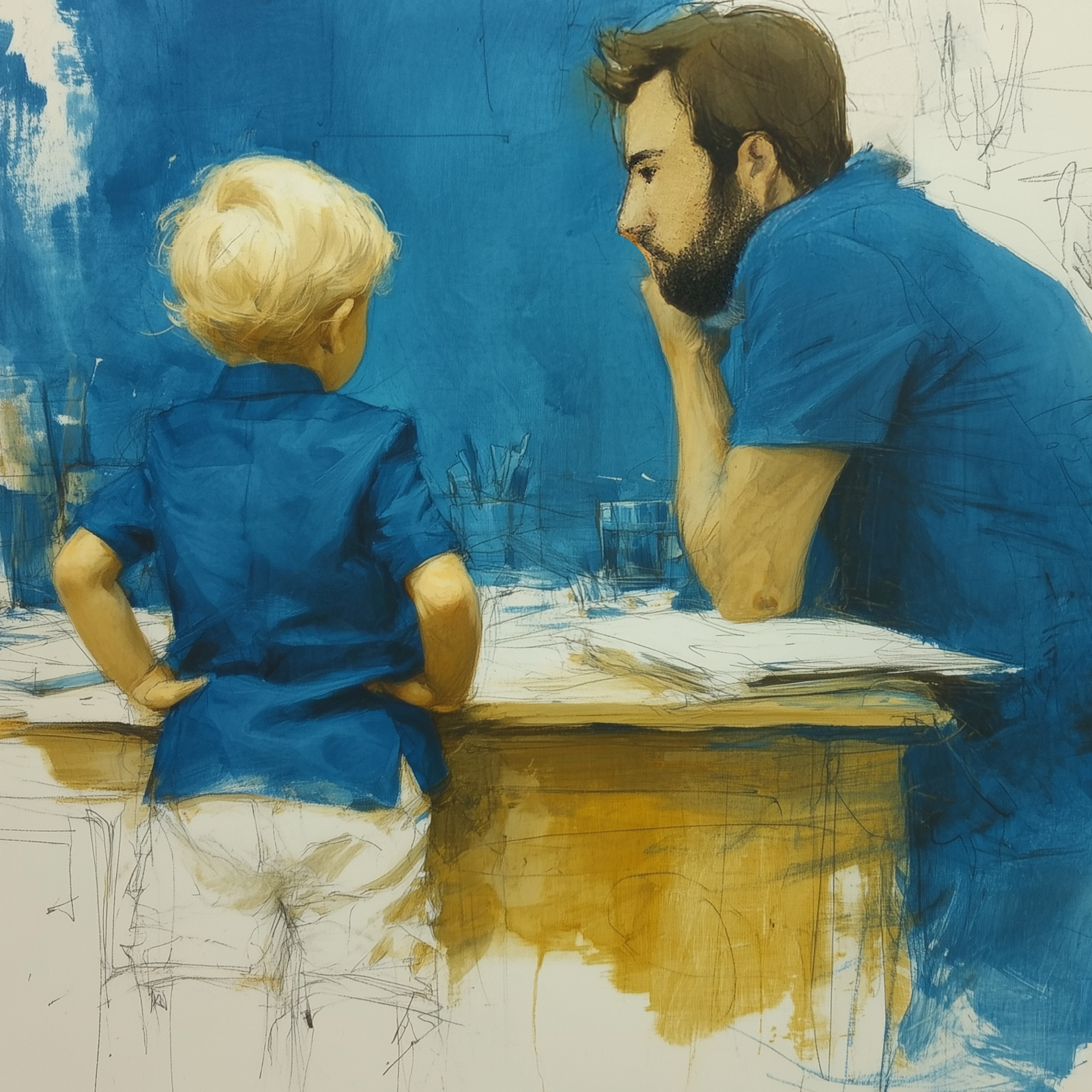
My 13-year-old daughter is smart and confident and knows how to talk. Except, I realised recently, when we’re out shopping or eating, when she is noticeably reluctant to speak to cashiers and servers. When I asked her why, she shared a memory of being five or six years old.
We were shopping in a garden centre* when I told her to be careful and stay close. These were the sort of places where children got snatched by strangers, I said, giving my daughter a random fear of shops and restaurants that has lingered to this day.
It’s something I don’t even remember saying. Maybe I had lost sight of her for a second or two. Maybe her hand slipped from mine. Maybe I was just repeating the stranger danger mantra from my own childhood. However it happened, I was horrified to discover that I’ve been transmitting my irrational fear to her.
Once I reflected, I realised that I’ve probably been communicating a distorted view of the world to her all her short life. And, I believe, it’s because of what’s appearing on my social media feeds.
It’s something I worry about daily. How disproportionately scary the world now feels, because of how the internet and social media bring the horrors of humankind into our lives in such a way that it all feels like it’s on our doorstep. Fake news. Propaganda. Tragedies and terror. I actively hide posts that pop up on my Facebook feed to try and minimise the number of dreadful stories from thousands of miles away that I’m subjected to – but the algorithms just keep pumping it to me.
Facing the facts
This parental paranoia plays on very real human fears. Fears of the very worst things happening to the dearest, most important people in our lives. I have no doubt that losing sight of my six-year-old daughter for more than 10 seconds all those years ago would have set my mind racing.
But all the evidence suggests that the worst things are happening less and less. Fear of crime still features high in our collective minds, but the most robust evidence we have says we’re less likely to be a victim of crime today than we were when I was my daughter’s age.
In England and Wales, violence, burglary and car crime have been declining for 30 years, according to the annual Crime Survey for England and Wales (CSEW). This survey is considered the most accurate because, instead of using statistics from the police, it’s collated directly from the public’s personal experiences of crime. It’s a reduction that is broadly reflected in post-industrial societies across the world. Some of the decrease is because our home and car security is hugely increased. Some of it is because our attitudes and responses have changed. Drink driving is no longer tolerated by most people. Domestic violence is much more likely to be reported than in the past.
It’s long been understood that being exposed to the idea of crime changes our perception of how common it is.
The late 20th century study, Public Opinion, Crime, And Criminal Justice, showed that people who watched a lot of TV news – especially local US TV “Eyewitness News”, where shootings, burglaries or muggings were the most featured types of stories told – had a much heightened fear of crime and a disproportionate idea of how likely they were to become a victim.
Now the same sense of threat looms large in my social media. And it will be reaching my daughter’s feeds too.
Preparing the way
In some ways, it’s nothing new. Over many years, the freedoms we allow our children have been gradually diminished. Researchers tracked the area that an extended Sheffield family across generations were allowed to play in. Whereas the great-grandfather walked six miles to go fishing, his great-grandson was only allowed to walk to the end of the street with an anxious parent watching from the front gate.
It’s an attitude that’s explored in The Coddling of the American Mind, a book that had a profound effect on me and the way I try and interact with my daughter. The authors argue that parents’ attempts to manage every aspect of safety in our children’s lives has led to a crisis in resilience and independence.
They recommend that parents should ‘prepare the child for the road and not the road for the child’. As a result, I’ve been actively attempting to build my daughter’s resilience, grant her structured independence and allow her to make her own mistakes.
If we can’t reshape the world to how we want it to be, we can at least recognise and get our children ready for it.
Shaping the story
But I believe those of us who work in the creative industries have another special responsibility. Through the stories we tell, we can shape language, shape stories and shape behaviour.
A study released just this month by University of Cambridge’s Political Psychology Lab shows how the power of storytelling can change people’s attitudes to big ideas. More than 3,000 people were shown one of three stories about Sonia, a Polish migrant, and her life in the UK.
Each story focused on a slightly different aspect of Sonia’s life designed to appeal to people with different attitudes to migration. The most impactful emphasised how Sonia works in the NHS and loves sitting down with her family to watch David Attenborough’s Blue Planet. Appealing to people’s empathy, not their fears, changed minds. It seems we’re not as immovable in our beliefs as our social media feeds might make us think.
As a creative professional, that makes a lot of sense
to me. I’ve spent my working life making films designed to provoke attention, sway opinion or change behaviour. In the world of advertising, we are obliged to make work that is legal, decent, honest and truthful. Within businesses and organisations, in internal communications films, we strive to show and share respect for each others’ backgrounds, cultures and opinions.
I find that simple, honest, personal testimonies allow us to see into the heads and the worlds of people who aren’t necessarily like me. It’s a level of respect and generosity I rarely see on social media.
Stranger things
There’s not much we can do about the big, bad world out there. Terrible things do happen. It’s hard as a parent to let go when your instinct is to protect your young, and the world around you feels like such a scary place.
But we have a responsibility to educate ourselves and our children not only about the dangers of the world, but about the dangers of believing everything they’re told about the world. And to tell stories that open up understanding and empathy, not close it down.
The world may be scary, but the garden centre really isn’t. You can talk to strangers. In fact, if you want to improve how we see each other and, by extension, how we see the world, you really should.
*Editor’s note. Just to show how events collide when you least expect them to. Lindsey’s daughter’s garden centre is coincidentally, exactly the same garden centre mentioned in Collide issue 4