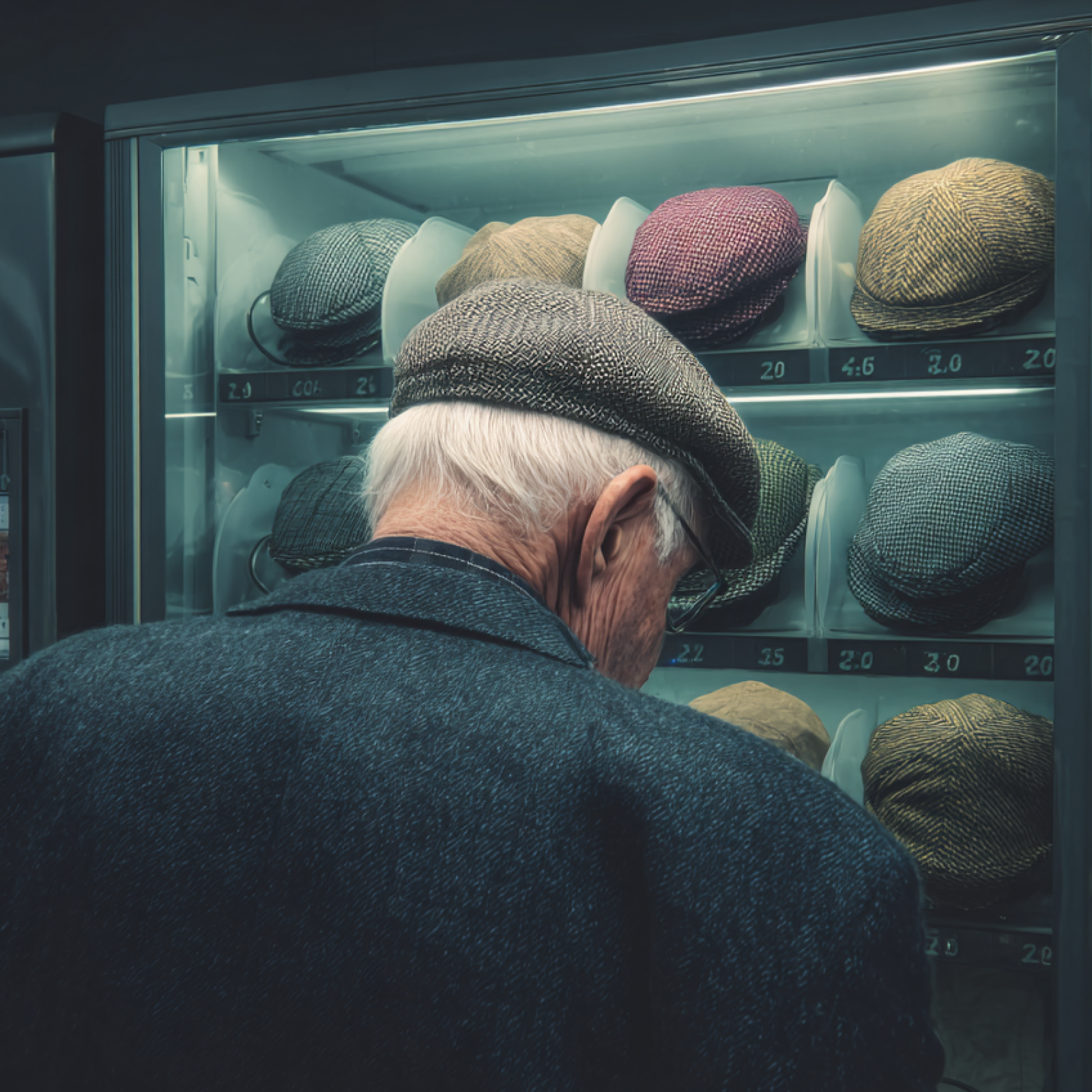
Are you ahead of the curve or behind the times? Charlie Leaver tests her memory of the latest trends and demands to be taken seriously.
In its desire to be permanently ahead of trend, the marketing industry loves to demonstrate its intrinsic knowledge of what makes audiences tick…
Put down your ice cubes and pick up your peppers. The hottest way to pep up your white wine this season doesn’t come out of the freezer but out of the spice drawer. It’s official: Sauvignon Blanc with fresh sliced jalapeño is the TikTok trend sensation of 2025. The news came to me through one of many trends newsletters that drop daily into my inbox. It breathlessly described it as the drinks trend of the summer, driven by Gen Z’s insatiable desire for new flavours.
Except… hold on a second. This mid-Millennial thinks she’s heard it all before. And not that long ago.
In the heady post-lockdown days of summer 2022, wasn’t the hot new Instagram trend sensation rosé wine with fresh sliced jalapeño? Even through my post-Covid brain-fog, I distinctly remember buying a bag of chillis from the Tesco Express across from the pub and asking the barman to slice them for our bottle of Provence.
The ’entire internet’
A quick search confirms it. Back then, according to The Drinks Bureau website, “it turns out the entire internet is adding jalapeños to their pink plonk”. Can it really be possible that the drinks trend that everyone was following less than three years ago hit large, got forgotten, and now is being claimed afresh? It seems unlikely. The entire internet is a big place.
Look, I hold my hand up. I’m a self-confessed gastronome with a taste for spice heat and an eye for an adventurous wine list. I’m professionally invested in this world. But I’m also self-aware enough to know if I asked most wine drinkers (let alone the entire internet) about the merits of a spicy Sauvy B, they would look at me totally blankly.
And isn’t that the point? In its desire to be permanently ahead of trend, the marketing industry loves to demonstrate its intrinsic knowledge of what makes audiences tick by anticipating what they will like, love or do before they have got there themselves. (Or is it to look the most tapped in at the inter-agency meeting?) This need for hyper-relevance is evidenced by the masses of trend reports and trend discussion and insight pieces and desk research we all do every day. What’s trending? Who is trending? And why?
Beyond the bubble
Of course, everyone sees the world from within their own frame of reference. Our conversations, our prejudices, our jokes. We all tend to assume that what we know is known by all. That our passions and our knowledge are at least understood by the masses if not adhered to. (Sharing a funny social media post with my (male, older) strategy colleague recently, he admitted he had to google each of the phrases “bacon moustache”, “Labubu” and “Dubai chocolate” before he could make any sense of it.)
But when the bubble becomes our profession, we need to be better. More objective. More thorough.
From my perspective as a strategist based 100m miles outside the M25, I think I’m more aware than many about the dangers of extrapolating from specific trends to a general population. It can be instructive to work with inhabitants of what Richard Huntington from Saatchi & Saatchi calls Marketingland, whose brands have national coverage but whose frame of reference can stretch only from Soho to Shoreditch. How your brand shows up in London for the capital’s consumers is going to be hugely different to what it means in the context of a tertiary town.
Padelling against the tide
For example, in June, The Times reported that “Padel is the UK’s new obsession. It’s the UK’s fastest-growing sport with 400,000 players, and smart entrepreneurs are capitalising on the boom.” The Lawn Tennis Association is providing £4.5m of seed money to unlock tens of millions of private investment in the sport. And drive into the nearest university city from here and you’ll see a vast new student accommodation block which will open next month promising “the city’s first student padel court”. Yet a couple of months ago, in a conversation in the heart of the London agency bubble, I heard that “padel is over”. Let’s hope no- one told those new students about to move in.
What trends like “padel” or “matcha” or “bubble tea” mean to vast swathes of the population who work outside our industry will be very different to what they mean to a brand manager who immerses themselves in all this constant trend watching. And our perspective on trends becomes even more significant when we form impressions of whole groups of people and make serious investment decisions on the back of it.
Generation Z-ero alcohol?
In his much-lauded book Generations, Professor Bobby Duffy from King’s College London, debunks the myth that Gen Zs, Millennials, Gen Xers or Boomers are significantly different in attitudes and behaviour, beyond what’s to be expected for any stage of life. As he says, “Baby Boomers were just as different from their parents as young people are from Baby Boomers today.” We’ve all heard the truism that Gen Z prefers experiences over things. But when the prices of housing and cars have increased at a much higher rate than holidays, it’s surely no surprise that experience is where the young are spending their money.
…our perspective on trends becomes even more significant when we form impressions of whole groups of people and make serious investment decisions on the back of it.
But even Duffy perpetuates the myth that Gen Z has a new attitude to drinking alcohol. He suggests that drinking is an outlier – a “stable generational behaviour, where the cultural norms that different generations grow up with result in very different relationships with alcohol”. It turns out he may be wrong. IWSR’s recent survey shows that the percentage of Gen Z drinking in the UK has jumped to 76% as of March 2025, putting them squarely in line with other generations.
It’s no surprise. While total pub numbers have declined, the ones that remain are doing rather well. Yes, nightclubs have suffered particularly badly post-Covid, but simultaneously lots of new concepts and new ways of going out have sprung up in their place, from competitive socialising to new restaurant formats. It turns out some young people actually really like socialising, and drinking, and some don’t. Just like for every generational group.
We need to be much clearer about what is a trend and what is a fad and refuse to use these as interchangeable terms.
Absolutely no one drinks tequila
Too much trend research relies on dodgy maths and quasi-science like this.
As with padel players above, journalists and marketers love to talk about the “fastest-growing” part of any sector – as if that matters. Beware the hype. Growing fast from a zero base isn’t that hard. In a previous life in the hospitality industry, I was bombarded by market trend- watching reports and the like. It’s a highly competitive market where 1000s of brands compete for precious space in the back bar, or even the hallowed speed rail in the on trade and for space on supermarket shelves in the off trade. Sales and marketing teams from behemoths such as Diageo down to little independent start-up brands would find trend data around tequila growing at massive percentages year-on-year, but always from a tiny, tiny base.
So, it turns out that, in the spirit of exaggerated marketing language, absolutely no one drinks tequila. When you look at the whole data set, vodka counts for a huge majority of spirits sold, with steady old Smirnoff dominating the market. Most people just drink vodka if they drink a spirit at all – although if you spend your time only in the hipster bars of Marketingland, you might find that hard to believe.
Separating fads from facts
In the marketing industry, we’re stuck uncomfortably between the macro and the micro. At one end, we make sweeping generalisations about consumer behaviour and societal change based on little more than anecdote or instinct. At the other, we notice ultra-niche, high-fashion moments so trivial as to be forgettable. Each can have its place if we understand and explain the context, but we need to be very clear what that place is to understand the impact on our brands, our campaigns and our customers.
Even according to one “most trusted” global trend consultancy, “in its traditional sense, a trend is a general shift in how people, communities and societies think, feel and behave. Trends rise slowly over time and travel across industries. Trends are not fads. Fads come and go fast and often don’t involve cultural shifts.” I wish they’d follow their own advice.
We need to be much clearer about what is a trend and what is a fad and refuse to use these as interchangeable terms. And even when we do report back from the fashion frontline, let’s be aware that everyone has a memory, and we really can’t get away as an industry with recycling trends from as little as three years ago.
As it turns out, a twist of spice in your wine glass is a lovely addition for a late summer barbecue. You should try it. Maybe you already did. Maybe you did and found it forgettable.
But so forgettable that in 2028, someone will be able to pretend it never happened and claim it as their own? Now, the erasure of history and appropriation of original ideas – they seem more like the kind of cultural trends that are well worth exploring.
When it comes to dividing the north from the south, where do you draw the line? Anything below Sheffield? Anything above London? For Sam Devey, it could all be a matter of technology.
Collide brought the three project management and process professionals together to talk about wrangling creativity, overflowing inboxes and managing focus.